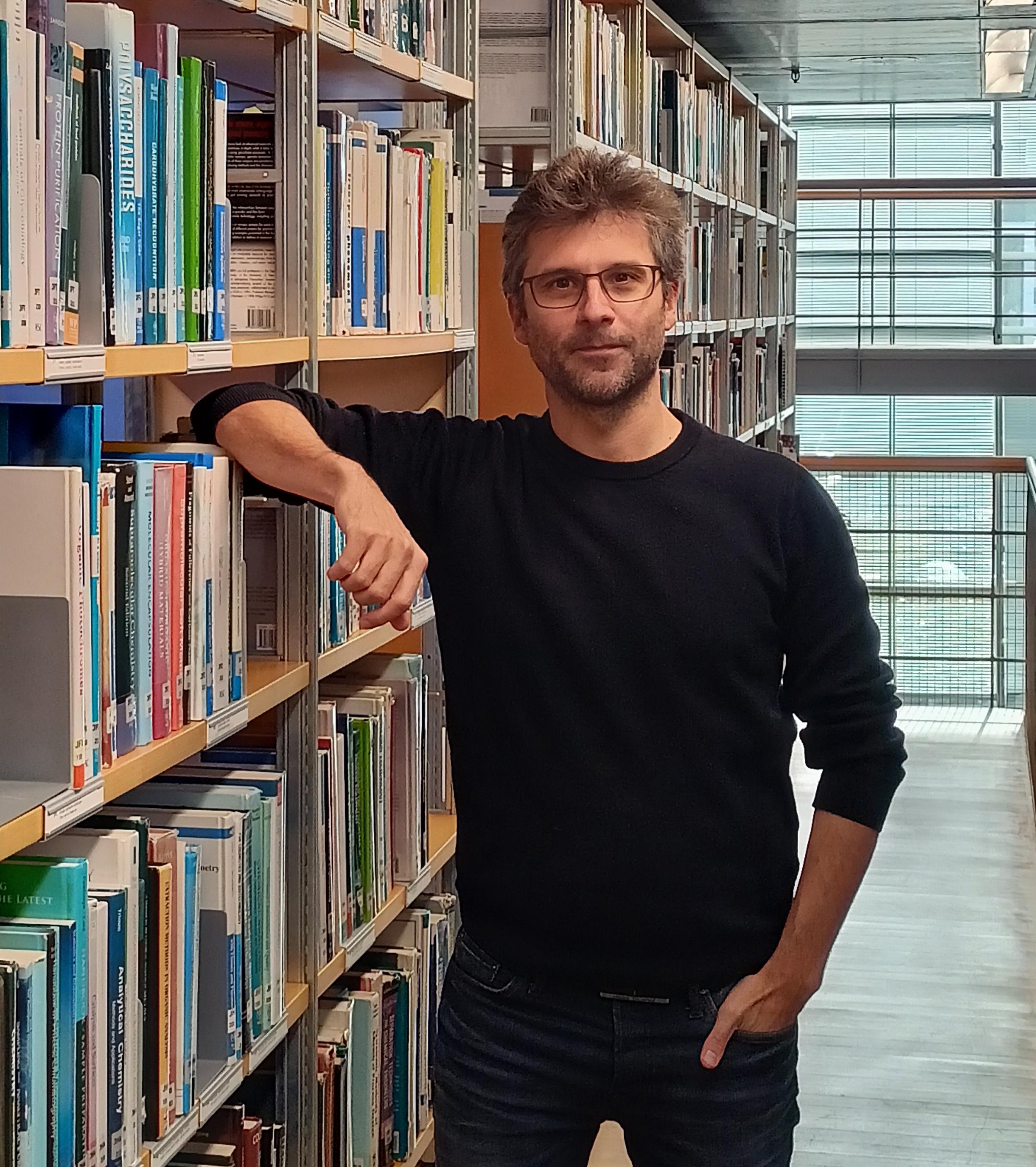
On the 1st of May, I’ll take up a new job at the Joint Research Center of the European Commission in Brussels – a three-year contract working as part of a newly formed unit endowed with the task of establishing a stronger link between researchers and policymakers.
A new beginning.
I’ll leave the Netherlands and TU Delft after three years and a half.
On the move, once again.
Here some highlights and lowlights from the last working experience.
Highlights – over the last 3.5 years I have:
- Finalized the writing of the book “Quantum Ecology”, which then appeared at the end of 2024 by MIT Press
- Published 11 articles (either single or co-authored), while 6 more articles written during my appointment are still under review
- Designed and taught (for three years) a new master course in “data ethics”, developing a transdisciplinary “problem-opening” approach
- Took part, as an invited speaker, in two summer schools
- Contributed to two MOOCs with original materials on data ethics
- Wrote an (unsuccessful) ERC starting grant proposal, which led (at least) to the publications of two articles
- Attended, as a speaker, 7 international conferences
- Supervised three master theses
- Proposed the establishment of a Department-level Research Exchange Meeting, of which I coordinated the first two events
A couple of months after I had been granted a salary bonus for my “excellent work” in both research and education, and a couple of months after my contract had been extended until November 2024, in June 2023 I was de facto dismissed from TU Delft.
The notification came to me from the then-head of my research group who, during a two-minute talk in an open-space office hosting other people (no surprise that TU Delft is struggling with a socially unsafe working environment), informed me that I could not resubmit my research proposal for a new grant application because, even if I were successful, there was no chance (possibility, willingness, or both, due to unspecified “high-level decisions”) for the department to grant me a tenured position. With this notification arriving just before the summer, I had virtually no time to find another institution willing to endorse my application. To be sure, this decision could only partially be explained with the current budget cuts imposed by the Dutch government on education because at that time this scenario was not there yet (although, possibly, TU Delft knew already of the need to cut funding for permanent positions).
The question is: if a postdoc cannot apply for funding and – so we were told by the former head of the department – a postdoc is not even supposed, in principle, to teach, what is s/he supposed to do? Only writing articles as a machine? For the sake of what, exactly?
From that moment onward, over the span of 18 months, and on top of my work at TU Delft:
- I have done roughly 60 academic applications for tenure-track positions (more or less, 1 every 10 days), around the world, most of which comprising on average of 9-10 documents (e.g., cover letter, CV, list of publications, research statement/proposal, teaching statement, research funding portfolio, syllabus samples, publication samples, diplomas, and sometimes names, contacts and/or letters of 3 referees – even before knowing to be invited to an interview)
- as a pure guess from memory, I was invited to around 8-12 interviews, either first or second stage (1 every 5/6 applications)
- eventually I got two offers (one in the UK and one in Taiwan) which, for timing and logistic reasons, I had to turn down
- If there is one thing I learnt from both job and grant applications is that, beyond the enormous fuss, interdisciplinarity is not well regarded in academia (not to speak of transdisciplinarity). One example comes from one of the comments I received on my grant proposal, in which one of the reviewers wrote that s/he could not see how my background in cultural and media studies (which date back to my PhD and 1st postdoc, thus being almost 10 years old) could be relevant to the proposal’s topic (a sociotechnical approach to city digital twins).
Lowlights – over the last 3.5 years:
- on two different occasions, we tried to establish a consortium comprising of 5 universities for a MSCA doctoral network grant application (based on a previous successful experience). We reached out to both colleagues we knew and scholars we believed could be a good fit and make a contribution to the project. On both occasions, we had to pull the plug after 5-6 months. While initially everyone was happy to jump on board, this was usually followed by a lack of real commitment in the form of missed deadlines and missed submissions, the skipping of meetings and, ultimately, the fall below radars of some (not all) partners (academic ghosting is a thing) – yet, it is fine to say “thank you, but I can’t”
- on two different occasions, two co-authored articles that were supposed to be included in two journals’ guest issues, were eventually rejected. That can happen, of course, but the modality and timing count. On both occasions, the review processes took around a year, if not longer; on both occasions, the articles underwent 3 revisions (4 versions in total), always following the comments we received; on both occasions, the articles were rejected at the very end with dubious motivations (such as, “the article now does not reflect the original idea”). On one occasion, when our article was still unpublished (we later managed to publish it elsewhere), we stumbled upon a blogpost authored by two scholars – one of whom was one of the guest editors and the other one was one of the reviewers (review was not double blind in that case) – which discussed very similar ideas to those contained in our article (the co-optation of ideas is a thing in academia)
- at the beginning of the writing of my ERC starting grant proposal, a couple of times my supervisor and myself kindly asked to the head of our research group to confidentially share her previously successful proposal (the funded project was almost at the end), only to encounter no response at all. While sharing (or not) a grant proposal is totally at the discretion of the PI, this attitude (especially, to be unseen) does not reflect the ideal of academic cooperation and support (siloing is a thing in academia, even within the same research group)
- on various occasions, I read and reviewed ongoing work from colleagues in the research network I was part of, which dealt with the same topic I was working on (data commons) but which systematically overlooked my work (that’s ok) and, more problematically, glossed over the issues I was raising from both a theoretical and practical perspectives (un-acknowledgement is a thing in academia)
- in a similar fashion, on various occasions I witnessed that the un-acknowledgment of existing work led to the birth of “monstrous” concepts, that is, concepts without any solid grounding or a proper heuristic validity, whose sole purpose was to seize a certain disciplinary area with a new (dead-end) idea (blindfolded conceptual branding is a thing in academia)
- on one occasion, an article I wrote independently was rejected by the journal’s chief editor, despite the sympathetic comments from one of the reviewers and the constructive critique from the other. That’s, of course, a prerogative of the chief editor to do so; but that same editor then proceeded to encourage a new submission, given the relevance of the article’s topic. I agreed to do so, and I substantially revised the article based on a detailed response to the reviewers’ comments. Eventually, the chief editor desk-rejected the new article because it tackled a topic that was “not a high-priority” for the journal. The whole process took 9 months and left me to square 1 (journal editors can and do exert arbitrary power)
- I witnessed colleagues securing for themselves a tenure-track position while their PhD defence was still pending (or after a few months of postdoc) and the University was in times of financial crisis (good mentors – it seems – are really everything in academia)
- For a tenure-track job opening, I was interviewed online, in the first stage, by a PhD student. While I am totally in favour of diversifying the cohort of scholars who compose the selection committees and who assess candidates, I feel that having a job interview led entirely by a PhD student (an assistant professor was also present) is just too much. In the second stage of that same hiring process, I was told what to prepare for the interview only 48h before because “we do not want candidates to be too prepared” (preparation and experience are becoming old-fashioned in academia, it seems)
- On a few occasions, it happened to me to attend job interviews and being asked questions that clearly demonstrated that the interviewers were not prepared, not knowing either who I was, or my work (employer-candidate relations, however, are never one-way only).
Overall, I learnt that:
1) the more is not necessarily the better; to do less is often a precondition to do things better – to say “no” is a possibility;
2) working relations are (almost) never personal: even when wrapped in good intentions and manners, they remain professional relations, that is, subjected to opportunity and transaction (very sadly);
3) powerful people are more “important” (so to speak) than powerful ideas; a weak idea in the hands of a powerful person will go much farer than a powerful idea in the hands of a weak person (shared ideas are not rarely subjected to point 2) and 3) leading to situations described above)
4) to care for the quality of one’s own work (and its environment) is a high-energy-demanding attitude which must be always preceded by, or at least go hand in hand with, the care and respect for oneself (including to stand one’s own ground whenever needed) because nobody else will supply that.
5) a good working environment (supportive, open, diverse, tolerant) is not the sum of a ticking box exercise across some ethical guidelines; it begins with the willingness and effort by each and all to self-questioning, as both individuals and a collective
One last consideration: precariousness should not become a deterrent for scholars to pursue their own ideas, by remaining safely on (disciplinary) beaten tracks; it is because academia is precarious that it becomes even more worth challenging epistemological assumptions and explore original paths.
Now, looking forward to the new job!


 Stefano Calzati
Leave a reply to stefano calzati Cancel reply