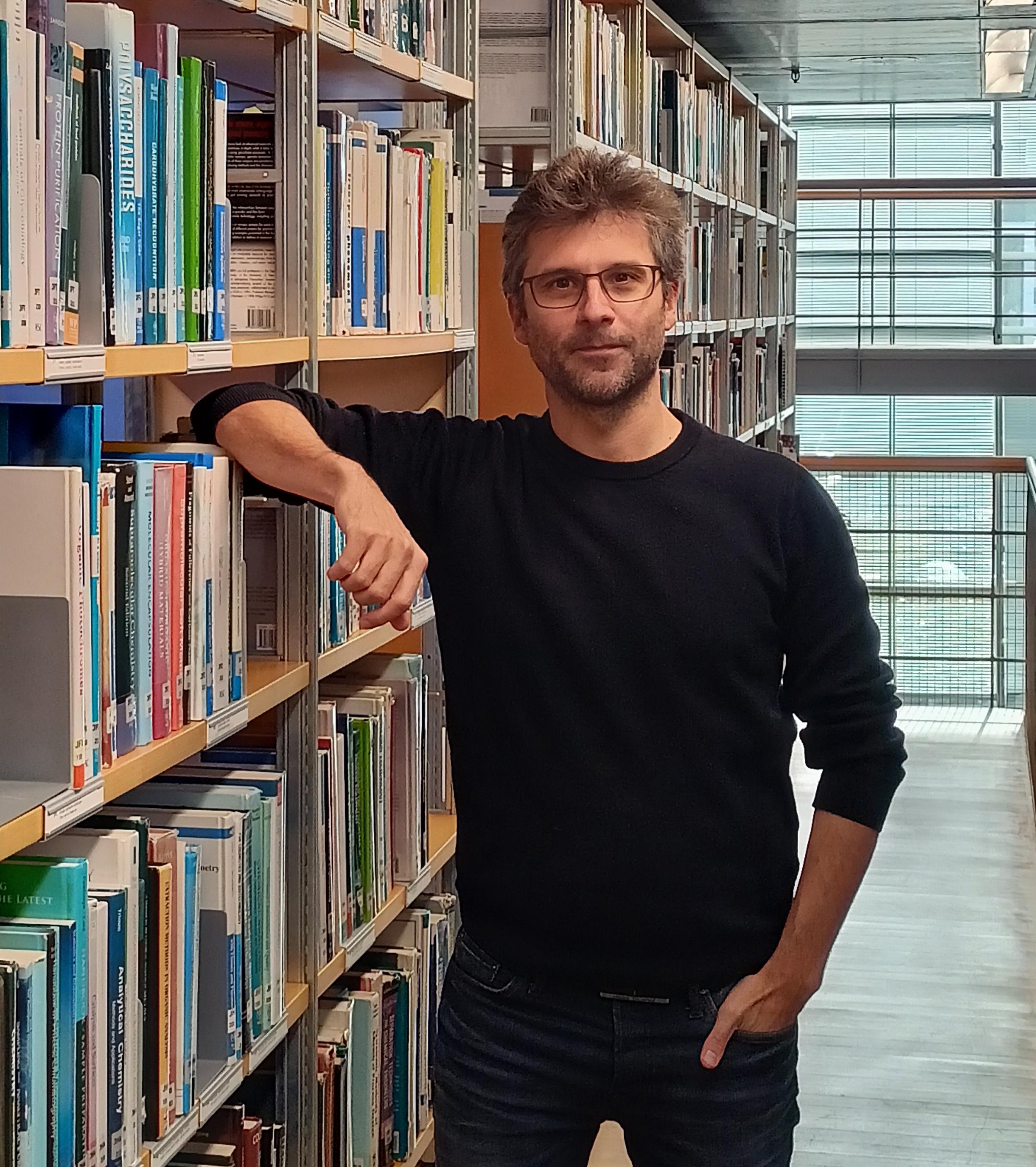
I was very glad, last week, to return to Bovisa campus of Polytechnic of Milan, where I taught for a couple of years from 2018 to 2020, to take part in the 10th STS Italia Conference (11-13 June) on “Technoscience for Good”.
On the 11th, I presented a paper on “The Making of a Communitarian Quantum Ecology: Ideas for a Republican Governance for Quantum Information Technologies“. I was very glad to witness, recently, that the ideas developed in this presentation – hopefully turning into an article for a special issue – deeply resonate with work calling for a planetary standpoint – in the spirit of the treaty on non-proliferation of nuclear weapons – when it comes to governing QITs. An example is the work by Prof. Mauritz Kop, where he advocates the establishment of an “Atomic Agency for Quantum-AI“.
To this, I add some tenets concerning the architecture of such a planetary endavour. In fact, rather than a single organisation governing the uses of quantum information technologies (QITs), I argue for the need to think in ecosystemic “republican” terms, along the lines of previous work I did on data commons.
The six tenets identified and discussed in the presentation are: 1) “quantum republic as a politeia“, 2) “distribution and accountability of (quantum) powers”, 3) “QITs governance as a systemic affair” (not only one of agency), 4) “QITs governance as a balance exercise across ‘collectual’ interests”, 5) “modular QITs governance across scales and contexts”, 6) “QITs governance as an open-ended process” to navigate fundamental uncertainty and entangled actors and interests.
On the 13th, I presented a paper titled “Through the Lens of Quantum Ecology: Holographic Bodies, Inconsistent Agents“. I was very glad to be part of a panel which – for the first time as far as I know – attempted to bridge work already done in quantum social theory and Science Technology and Society more properly.
This second presentation expands – theoretically speaking – on the conceptualization of the quantum ecology as an onto-epistemological framework, as it is already laid out in our book.
Notably, I introduce the “ecology of the body” as an autopoietic, open-ended, and “always-from-within” sensing of the world, which precedes and informs the language, digital, and quantum ecologies. Formalising the ecology of the body – beyond our scattered but unsystematised mentions in the book – enables to discuss a radically all-encompassing notion of “sensing” which is, de facto, agent-agnostic. This is an in-the-making idea that I have already introduced elsewhere.
Notably, starting from a position “from-within”, I conceptualise the body ecology as a “fractal hologram“, always already multiple, always already containing its own (open) whole. In other words, body/ies – apart from being physical entities – are emerging “collectual” (collective+individual) instantiations. Such an understanding brings some practical consequences, among which 1) the collapse of the “rational subject” as a performative construct adopted somewhat uncritically across social science domains; 2) the recognition of the inherent onto-epistemological inconsistency of (any) agents. Implications are relevant for disciplines as diverse as normative tech governance, economic theory, international relations, cultural studies.
 Stefano Calzati
Leave a comment